

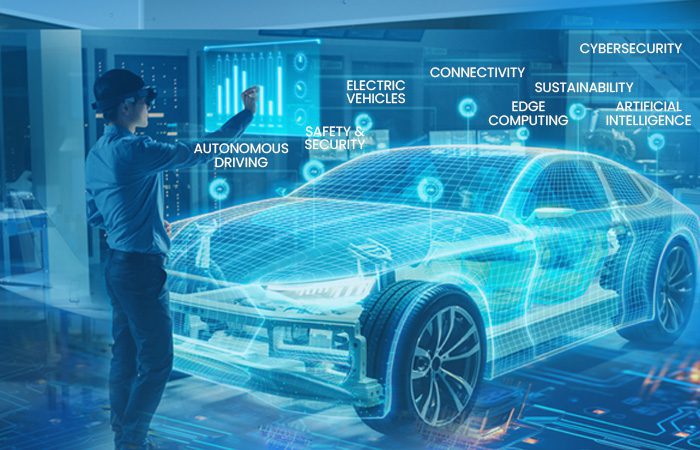
The automotive industry is undergoing the most profound transformation since the introduction of the assembly line. For over a century, vehicles were primarily defined by their mechanical components, including the engine, transmission, chassis, and suspension. Today, horsepower and mechanical displacement are taking a backseat to a new defining characteristic: computational power.
Modern vehicles are essentially supercomputers on wheels. High-end automobiles run on millions of lines of code, managing everything from basic windshield wipers to complex semi-autonomous driving systems. Because software controls the modern driving experience, the ability to modify, fix, and improve that software has become a core element of automotive manufacturing and ownership.
Software updates have transitioned from an occasional maintenance task performed at a dealership to a critical, continuous lifecycle management tool. Understanding how these updates work, why they matter, and how they shape the future of transportation is essential for every modern driver.
The Evolution from Mechanical to Software-Defined Vehicles
To understand the critical role of software updates, it is first necessary to look at how vehicles are built today. The contemporary car is a complex network of Electronic Control Units (ECUs), which are tiny computers dedicated to specific tasks. One ECU might manage the anti-lock braking system, while another controls the cabin climate or the infotainment screen.
In the past, once a car rolled off the factory line, its features and performance characteristics were locked in stone. If a manufacturer discovered a bug in the engine control logic or wanted to improve the fuel mapping, owners had to physically drive to a dealership. A technician would then plug a specialized scanner into the vehicle’s onboard diagnostics port to manually flash the new firmware.
This hardware-centric model has given way to the Software-Defined Vehicle (SDV). In an SDV, the hardware is designed with excess capacity, allowing its behavior, capabilities, and features to be modified long after the vehicle leaves the showroom floor. Software updates serve as the mechanism that unlocks this ongoing adaptability.
Over-the-Air (OTA) Updates: The New Industry Standard
The true catalyst for the automotive software revolution is the widespread adoption of Over-the-Air (OTA) updates. Borrowed from the smartphone and consumer electronics industries, OTA technology allows automakers to transmit software packages wirelessly using cellular networks or home Wi-Fi connections.
There are two primary types of OTA updates utilized in modern automotive architecture:
SOTA (Software-over-the-Air)
SOTA updates target the non-critical, consumer-facing aspects of the vehicle. This includes updating navigation maps, tweaking the user interface of the touchscreen display, adding new streaming applications, or patching the Bluetooth connectivity system. These updates are generally low-risk and change how the user interacts with the vehicle’s cabin technology.
FOTA (Firmware-over-the-Air)
FOTA updates are far more complex and critical. They involve modifying the operating code of the underlying hardware components. FOTA updates can alter how the battery management system regulates temperature in an electric vehicle, adjust the calibration of the electronic power steering, modify braking pressure, or update the perception algorithms of advanced driver-assistance systems (ADAS).
Why Automotive Software Updates Are Critical
Automotive software updates are not merely about adding fresh visual themes to a dashboard screen. They serve several fundamental purposes that directly impact vehicle safety, longevity, and value.
1. Rapid Security Patches and Cyber Defenses
Because modern vehicles are permanently connected to the internet, they are vulnerable to cybersecurity threats. Malicious actors constantly look for vulnerabilities in automotive software that could allow them to access user data, track vehicle location, or, in worst-case scenarios, take control of steering and braking systems.
When security researchers or internal teams discover a vulnerability, automakers can use OTA updates to deploy immediate cryptographic patches across their entire global fleet simultaneously. This rapid deployment capability is vital for preventing widespread cyberattacks before they can materialize.
2. Eliminating Costly Physical Recalls
Historically, an automotive recall was an expensive logistical nightmare. Manufacturers had to mail physical letters to thousands of owners, coordinate parts availability with hundreds of dealerships, and pay technicians for hours of manual labor.
Today, a significant percentage of automotive recalls are related to software glitches rather than structural component failures. By resolving these issues remotely via a firmware update, automakers save hundreds of millions of dollars in administrative and labor costs. More importantly, it eliminates the inconvenience for the consumer, who no longer needs to lose a day waiting in a dealership service bay.
3. Continuous Optimization of Performance and Efficiency
Software updates allow engineers to continuously refine how a car drives based on real-world data collected from millions of miles driven by consumers. For example, an update can optimize the shifting algorithms of an automatic transmission to maximize highway fuel efficiency. In electric vehicles, software updates frequently optimize regenerative braking profiles or adjust charging curves, effectively giving owners more driving range and faster charging times without changing a single piece of physical hardware.
4. Feature Activation and Personalization
The concept of a depreciating asset is being challenged by software-defined vehicles. Instead of a car getting progressively older and more outdated, software updates allow a vehicle to improve over time. Automakers can introduce entirely new features years after the vehicle was purchased. This might include adding a new semi-autonomous highway driving mode, introducing automated parking capabilities, or improving the voice recognition system to understand natural speech patterns better.
The Architecture and Challenges of Automotive Updates
While updating a smartphone is relatively straightforward, deploying software to a two-ton vehicle traveling at highway speeds introduces immense engineering challenges.
Automotive software updates require robust fail-safe mechanisms to ensure the vehicle remains safe at all times. This is achieved through a dual-bank or A/B memory update strategy. When an update is downloaded, it is written to an inactive memory partition (Bank B) while the vehicle continues to operate normally using the active partition (Bank A). Once the download is complete and verified via cryptographic checksums, the vehicle switches to Bank B during its next startup cycle. If a fault or corruption is detected during activation, the system instantly rolls back to the stable code in Bank A, preventing the vehicle from becoming disabled or bricked.
Regulatory compliance is another massive hurdle. Different regions have strict legal requirements regarding automotive safety and emissions. If a software update alters the power output of an engine or modifies an autonomous lane-keep assist system, it must comply with international standards such as UNECE regulations, ensuring that remote modifications do not inadvertently bypass vehicle safety certifications.
The Business Transformation: Function-on-Demand
The shift toward software-defined vehicles has completely revolutionized the automotive business model. Automakers are transitioning from traditional manufacturing companies into technology platforms, introducing the concept of Function-on-Demand (FoD).
Under this model, vehicles are manufactured with all physical hardware pre-installed, but certain advanced capabilities are locked behind software walls. Consumers can choose to unlock these features permanently or via monthly subscription models. Examples include unlocking heated seats during winter months, boosting horsepower for a road trip, or subscribing to advanced navigation routing. While controversial among some consumers, this approach gives buyers greater flexibility to customize their vehicle’s capabilities according to their current budget and needs.
Conclusion: The Road Ahead
Software updates have rewritten the rules of automotive engineering, ownership, and maintenance. By separating vehicle functionality from physical hardware constraints, automakers can deliver safer, more efficient, and increasingly capable vehicles that evolve alongside technological breakthroughs. As autonomous driving logic matures and electric vehicle powertrains become standard, the quality, security, and execution of software updates will remain the ultimate benchmark separating the automotive leaders from the rest of the pack.
Frequently Asked Questions
Can an automotive software update install successfully while I am actively driving my vehicle?
No, critical firmware updates that affect powertrain, braking, or safety systems cannot be installed while the vehicle is in motion. The vehicle must be parked in a safe location, shifted into park, and turned off. Most manufacturers allow drivers to schedule these intensive updates overnight, similar to smartphone updates, ensuring the car is ready to drive by morning.
What happens if my vehicle loses internet connectivity in the middle of downloading an update?
Modern automotive update managers are built with robust download resume features. If a cellular signal drops out while downloading an update package, the system pauses the progress. Once connectivity is safely re-established, the download resumes from where it left off without corrupting existing vehicle systems.
Do automotive software updates use up my personal cellular phone data plan?
No, vehicle software updates do not consume your personal phone data. Modern vehicles equipped with OTA capabilities feature their own built-in cellular telematics modules and dedicated SIM cards provided by the automaker. Alternatively, owners can connect their vehicles to their home Wi-Fi networks while parked in a garage or driveway to download updates for free.
Are older vehicles without built-in cellular connections completely locked out of software upgrades?
Vehicles lacking integrated wireless modems cannot receive automatic OTA updates. However, they can still receive software updates manually. Owners must bring the vehicle to an authorized dealership or certified service center, where a technician connects a physical diagnostics terminal to download the necessary files directly to the vehicle’s onboard computers.
Is it possible for a vehicle owner to opt out of receiving mandatory software updates?
While consumers can typically postpone non-essential infotainment or convenience updates, they generally cannot opt out of critical safety or compliance updates permanently. If an update addresses a major safety defect or emissions compliance issue, automakers and regulatory bodies require the software patch to be applied to ensure the vehicle remains legally roadworthy.
How do automakers prevent software updates from draining the main 12-volt vehicle battery?
Before initiating a software installation, the vehicle’s central computer performs a comprehensive pre-check sequence. This includes verifying that the 12-volt battery has a charge level above a specific safety threshold. If the battery charge is deemed too low to sustain the electronics during the installation process, the system postpones the update and alerts the driver to run the vehicle first.